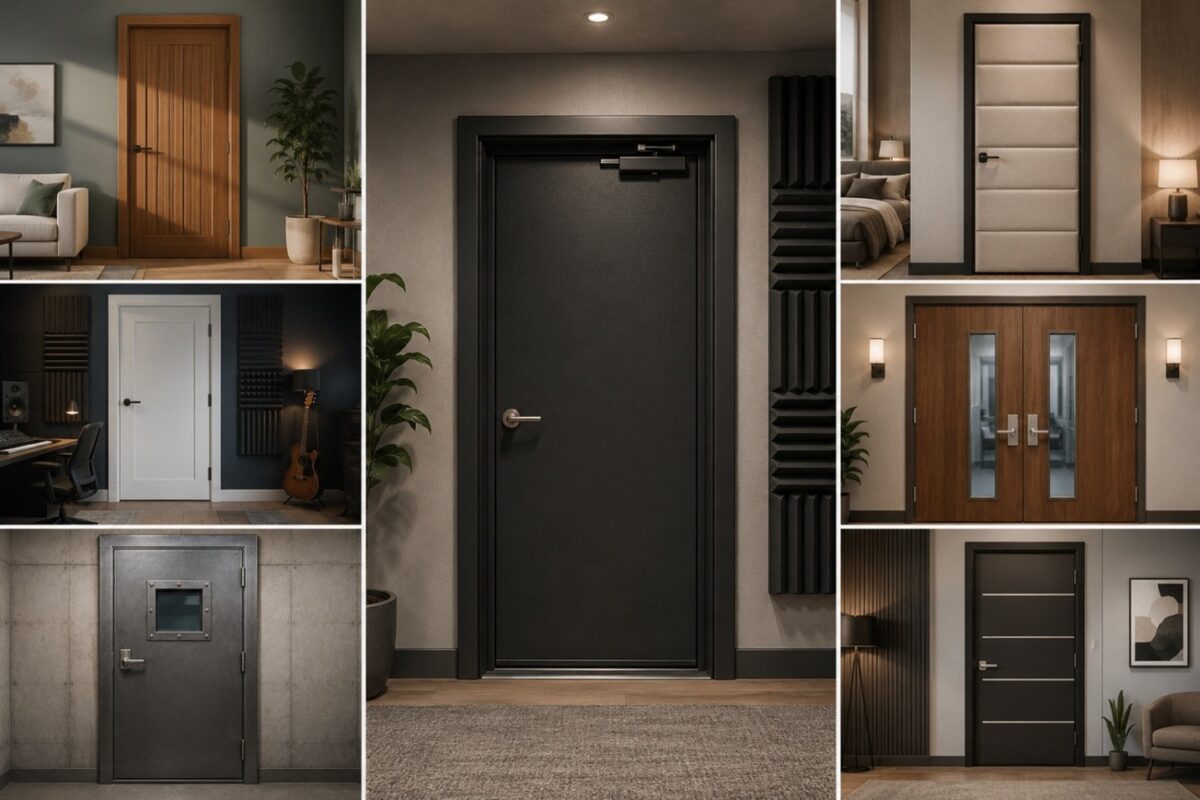
The purpose of a home’s soundproof door is to minimize noise transfer from one room to another and from the outside world (traffic, neighbours, and building activity). Sound is blocked by a variety of soundproofing door materials, including steel, composite, laminated glass, wood, and uPVC. However, under Indian conditions, uPVC is superior in terms of long-term value, low maintenance, and acoustic performance. This write-up discusses the best soundproof door types, their operation, their ability to reduce noise, and how to select the best one for your house are all covered in this article.
What Makes a Door Soundproof?
A few elements that contribute to a door’s soundproofness are listed below
1. STC Rating
Sound Transmission Class, or STC, quantifies the amount of sound that a door can block. The majority of noise can still flow through a hollow door, which typically has an STC value of 20–25. Thus, search for a door that has an STC rating of at least 35.
2. Mass
Because sound travels by vibration, a heavier door vibrates less. So, a door that is dense and sturdy lets in less sound.
3. Seals
Sound can be reduced only when a door closes tightly. The noise will flow through even a tiny opening. So, it’s crucial to have airtight sealing around the door’s frame and bottom to prevent sound leaks.
Common Noise Problems in Indian Homes
Traffic
Houses located on ground floor flats, and near main roads are prone to face more noise issues.
Neighbours
Loud neighbour voices, TV, and cooking sounds pass through shared walls causing disturbance.
DG sets and pumps
This is a common problem faced by people in housing societies. Mostly faced by houseowners whose blocks are very close to DG sets and pumps.
Corridor noise
People living in apartments often face these issues as the corridor doors open directly into shared stairwells.
Construction
Noise from construction is a prevalent issue in urban areas, where construction activities are at peak. Some of the cities like Bengaluru, Hyderabad and Pune often face issues due to construction noise.
WFH calls
Working from home needs a quiet environment, especially when attending calls. Employees face interruptions from family and neighbour activities.
Best Materials for Soundproof Doors
| Material |
How It Blocks Sound |
Maintenance |
| Solid Wood / MDF |
Heavy mass absorbs sound vibrations |
High – Warping, termites, repainting |
| uPVC Multi-Chamber |
Air chambers reduce sound transfer; seals block gaps |
Very Low – No warping, termites, or painting |
| Laminated Glass |
PVB layer dampens sound vibrations |
Low |
| Double-Glazed Glass |
Air gap between panes reduces noise |
Medium – Seal failure requires replacement |
| Steel + Mineral Wool |
High mass and insulation block sound |
Low |
| Neoprene Seals |
Stop sound leakage through gaps |
Replace every 8–10 years |
Types of Soundproof Doors for Homes
1. Wooden Doors
In wooden doors, hollow cardboard fillings are replaced by MDF, particleboard, or wood composite cores in solid wooden doors. This increased mass lessens the transfer of sound.
- STC Range: 28–45
- Ideal For: Main doors, puja rooms, bedrooms, and home offices
- Good noise reduction because of the large mass
- Can swell or distort in humid conditions
- For coastal cities, moisture-resistant wood is advised
2. uPVC Soundproof Doors
To cut down on noise, uPVC doors include factory-installed compression seals and multi-chamber profiles.
- STC Range: 30–42
- Ideal For: External doors, bathrooms, balconies, and main entrances
- The sound path is interrupted in part by internal air chambers.
- Resistant to rust, termites, and moisture
- Repainting and routine upkeep are not necessary.
- provides steady performance over time.
3. Glass Doors with Double Glazing
These doors have two glass panes with a gap filled with argon or air between them.
- STC Range: 30–40
- Ideal For: Glass entryway, living rooms, and balconies
- minimises noise from conversations and traffic
- maximises the amount of natural light
- The ideal frame is one that is tightly sealed.
4. Doors with laminated glass
A unique PVB interlayer found in laminated glass absorbs sound waves.
- STC Range: 35–45
- Ideal For: Large glass doors, walls, and upscale residences
- superior to standard glass in terms of sound control
- also improves safety by stopping hazardous shattering
- works best if merged with a premium frame.
5. Steel Acoustic Doors
Steel acoustic doors combine a steel shell with mineral wool insulation.
- STC Range: 45–60
- Best For: Home theatres, studios, and generator rooms
- Provides excellent sound isolation
- Effective against low-frequency noise and bass
- Requires reinforced frames
6. Sliding doors that are soundproof
To lessen sound leakage around the tracks, these sliding doors employ unique acoustic seals.
- STC Range: 28–42
- Ideal For: Compact areas, room separators, and balconies
- Compared to hinged doors, it saves space.
- Performance is significantly impacted by the quality of seal.
- For optimal results, frequent track cleaning is necessary
7. Composite Acoustic Doors
Before sound travels to the other side, it is absorbed and distorted by panel layers.
- Range of STC: 38–52
- Ideal For: Bedrooms, road-facing rooms, and home offices
- Provides robust soundproofing without being very heavy
- Sturdier than conventional wooden doors
- Before purchasing, request an STC test certificate
Soundproofing Performance Comparison
| Door Type |
STC Range |
Handles |
Best Room |
Upkeep |
| Solid Core Wooden |
28–45 |
Voices, TV, light traffic noise |
Bedroom, home office |
High |
| uPVC Soundproof |
30–42 |
Voices, rain, moderate traffic noise |
Any room, any climate |
Very Low |
| Double-Glazed Glass |
30–40 |
Street noise, conversations |
Balcony, living room |
Medium |
| Laminated Glass |
35–45 |
Voices and mid-frequency noise |
Glass walls, partitions |
Low |
| Steel Acoustic |
45–60 |
Bass, DG sets, heavy noise |
Home theatre, music room |
Low |
| Sliding Doors with Seals |
28–42 |
Voices and everyday noise |
Room dividers, balconies |
Medium |
| Acoustic Composite |
38–52 |
Traffic noise, voices, mid-bass |
Home office, bedroom |
Low |
How to Choose the Right Soundproof Door
The type of noise you want to block, your budget, and the location of your property all influence the finest soundproof door.
For Loud Noise
Select a door with an STC value of 45 or greater if you need to block deep bass sounds, truck noise, or DG sets.
Top choices: Acoustic Composite Doors or Steel Doors
Perfect for: Homes close to busy roads, music rooms, and home theatres
For Commonplace Home Noise
An STC rating of 35–42 is sufficient for voices, TV sound, hallway noise, and regular traffic.
Top choices: Solid core wooden doors or uPVC soundproof doors
Perfect for: Living areas, offices at home, and bedrooms
When Light Is Important
Glass doors are an option if you wish to cut down noise without obstructing daylight.
For a comparable price, laminated glass doors provide superior sound insulation than double-glazed doors.
Perfect for glass barriers, living rooms, and balconies
For Humid Regions
The long-term performance of a door may be impacted by moisture. Termites, dampness, and warping are all resisted by uPVC doors. Over time, wooden doors may expand, contract, or develop gaps.
Perfect for cities experiencing intense monsoons or excessive humidity.
When There Is Not Enough Space
Conventional hinged doors need proper space to open. Sliding doors that are soundproof are a sensible substitute. To lessen sound leakage, prefer models with superior seals.
For Buyers on a Tight Budget
A high-end acoustic door is not always necessary. For less money, a hardwood door with a solid core and high-quality seals can reduce noise to a great extent.
Ideal for houseowners seeking an affordable improvement.
Best Overall Choice for Most Homes
uPVC soundproof doors are frequently a sensible option if you want to combine low durability, maintenance, and acoustic insulation.
They provide:
- Noise reduction
- Termite and moisture resistance
- Durable seals
- Minimal upkeep needs
It is not just the material that is needed to make the perfect door. For soundproofing to be effective, a decent fit, adequate seals, and the appropriate STC rating are all crucial.
Top choices: Solid core wooden doors or uPVC soundproof doors
If Natural Light Is Required: Select a door made of glass to allow natural light and block noise. Choose laminated glass because it blocks more sound.
For Coastal or Humid Cities: Select uPVC doors, because they are perfect for Indian temperatures because they don’t swell, twist, or draw insects.
If There Is Not Enough Room: Select an acoustically sealed sliding door. It helps cut down on noise and conserves space.
If You’re on a Budget: A hardwood door with a sturdy core and adequate seals can enhance soundproofing without being expensive.
The Best Option All Around: uPVC soundproof doors provide the best combination of longevity, low maintenance, and noise reduction for the majority of Indian households.
Note: Appropriate seals are crucial regardless of the door you select. If there are holes around a door, even the greatest one won’t be able to stop the sound.
Tips to Improve Any Door’s Soundproofing
Install a door sweep
The gap beneath the door allows the majority of sound to escape. This gap is filled by a door sweep, which can have a noticeable impact.
Seal gaps around the frame
Sound can easily penetrate across small gaps. Acoustic caulk maintains its flexibility for years and aids in the creation of an airtight seal.
Add quality door seals
Effective sealing around the door’s edges aid in reducing noise. Compared to regular foam strips, neoprene seals have a far longer lifespan.
Check the hinges
Gaps may result from the door sagging due to loose hinges. They may be tightened to improve the seal in a matter of minutes.
Use thick curtains
Heavy blackout curtains help lessen room echo and absorb some sound. They won’t make a room soundproof.
Upgrade Your Home with the Right Soundproof Door
Most people blame the walls when a room feels noisy.
Then they replace the door and realise how much sound was leaking through it.
A hollow door does very little against traffic noise, TV sounds, or conversations from the next room. In many homes, the biggest problem isn’t the wall. It’s the gap under the door.
Some homeowners still prefer solid wood because of the look and feel. Others go with uPVC because they don’t want to deal with swelling during monsoon season or termite treatment every few years.
Whatever door you install, pay attention to the seals. A premium acoustic door with a gap underneath will never perform the way it should.
If one room keeps bothering you, start there. A quieter bedroom or home office is usually enough to notice the difference.
Frequently Asked Questions:
Q1. Which door type is best for soundproofing?
The answer depends on the noise you’re attempting to block. Solid-core wooden doors and uPVC are sufficient for bedrooms and home offices. Steel acoustic and composite doors work better in areas where there is a lot of noise, such as from DG sets, music systems, or vehicles.
Q2. Are uPVC doors effective for noise reduction?
Yes, in most of the cases. uPVC soundproof doors use compression seals and multi-chamber profiles to lessen commonplace noises like TV noise, traffic, and conversations. Another benefit is that the seals continue to function correctly over time because the frame does not expand or deform due to weather conditions.
Q3. Do sliding doors block sound effectively?
Yes , sliding doors are recognised for being soundproof. Because they use specialist seals to block noise. They might not be as good as a high-end hinged acoustic door, but they are a good choice in small spaces.
Q4. What is the Average Cost of Soundproof Doors in India?
There is no fixed price for a soundproof door, as the final price depends on factors such as the door material, size, acoustic rating, hardware, glazing requirements, and installation.
A basic solid-core wooden door will cost much less than a specialised acoustic steel door or a large laminated glass system. Customisation, frame quality, and sealing systems can also influence the overall budget.