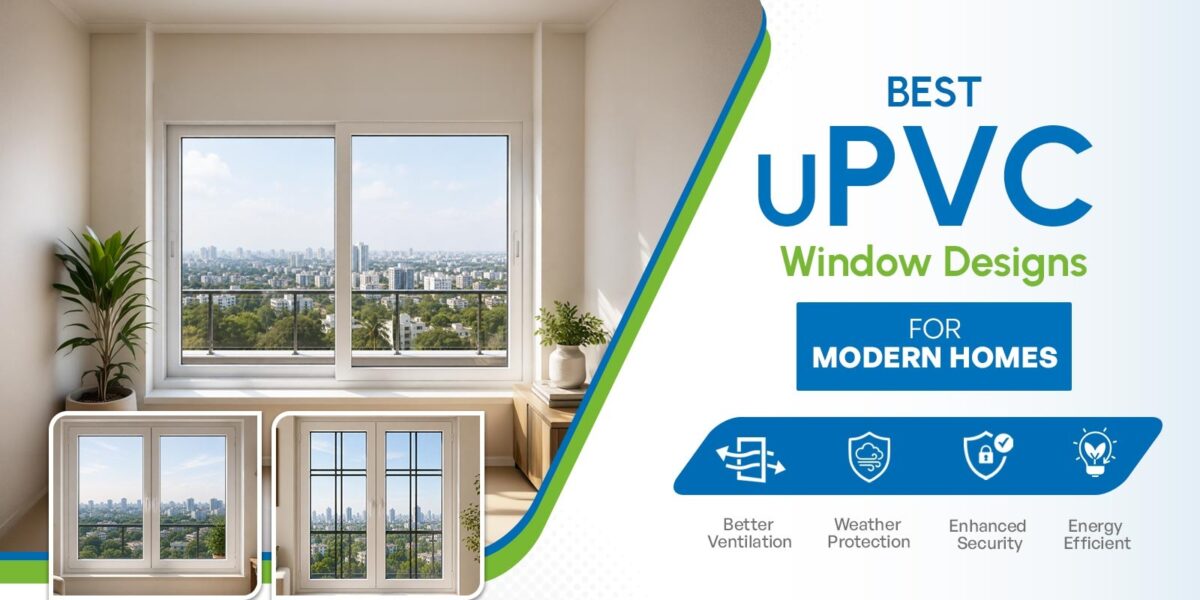
Balcony window designs are window styles designed for balconies to improve natural light, ventilation, weather protection, and outdoor views. The right balcony window design depends on multiple factors like space, ventilation requirements, local climate, preferred opening mechanism, and frame material. So choosing the right design improves comfort, energy efficiency, durability, and the appearance of your home.
Popular modern balcony window designs are sliding, casement, tilt and turn, combination, villa, arch and fixed windows. Each design offers different levels of ventilation, weather sealing, maintenance, and space efficiency. This guide explains how each balcony window design works best, its advantages, limitations, and why uPVC is one of the preferred materials for modern residential windows.
What Is a Balcony Window Design?
A balcony window design refers to the style, opening mechanism, frame configuration, and glazing arrangement used for windows that open towards or overlook a balcony. The right balcony window design improves ventilation, natural daylight, weather protection, security, and outdoor views while matching the architectural style of the home.
Unlike interior windows, balcony windows remain continuously exposed to sunlight, rain, humidity, wind pressure, and temperature fluctuations. Their performance depends on multiple engineering factors, including the opening mechanism, glazing, weather seals, drainage system, hardware quality, and frame material. Selecting the right combination improves comfort, reduces maintenance, and increases the service life of the window.
uPVC balcony window systems are tested against recognised performance standards, which are commonly referred to by manufacturers.
In India
IS 17600
International
EN 12207 (air permeability)
EN 12208 (watertightness)
EN 12210 (wind resistance) manufacturers.
Asking a supplier for test certification against these standards is a reliable way to compare
products beyond marketing claims.
When selecting a balcony window design, consider these factors
- Available balcony space
- Ventilation requirements
- Privacy needs
- Local climate and weather exposure
- Safety requirements
- Maintenance expectations
- Window frame material
- Energy efficiency goals
How Do You Choose the Best Balcony Window Design for Your Home?
The best balcony window design depends on the available space, ventilation needs, local climate, privacy requirements, safety expectations, and preferred opening mechanism. Choosing the right window style with a durable frame material improves comfort, offers weather protection, and provides long-term performance.
Choose a Balcony Window Design Based on Available Space
Sliding balcony windows are suitable for compact balconies because they slide horizontally without taking up any extra floor space. Larger balconies can accommodate casement, combination, or villa windows because they open wider and allow greater airflow.
Select a Balcony Window Design That Meets Your Ventilation Requirements
Different balcony window designs provide different levels of ventilation. Casement windows generally deliver maximum airflow because the entire sash opens — typically 90–100% of the frame area. Sliding windows offer controlled ventilation, as they can open only one section at a time. Tilt and turn windows provide two ventilation modes, allowing homeowners to choose secure everyday ventilation or a fully open window whenever required.
Consider Local Weather Before Choosing a Balcony Window Design
Choose your balcony windows based on your local climate. Homes in areas with heavy rain, coastal humidity, or strong winds require special protection. You need high-quality weather seals, built-in drainage channels, and heavy-duty hardware components.
Prioritise Balcony Window Safety Features
Balcony windows should incorporate multi-point systems that lock the window sash at 3 to 5 different locations. This locking mechanism makes forced entry difficult for intruders, and also creates a tight weather seal.
Choose a Low-Maintenance Balcony Window Material
The choice of frame material affects how long your windows last and how much maintenance they require. uPVC is a popular choice for balconies because it does not rust, corrode, or rot. It also doesn’t need regular painting. Most trusted manufacturers back this material with a 10 to 15-year performance warranty. Its moisture-resistant properties make it suitable for long-term outdoor exposure while maintaining consistent performance with minimal upkeep.
Here are 7 Balcony Design Ideas
Choosing the right balcony window design is not only about appearance. The opening style, frame material, glazing and hardware work together to determine how well the window performs throughout its lifetime.
Sliding Balcony Windows
Sliding balcony windows use two or more sashes that move horizontally on the tracks. Unlike hinged windows, sashes don’t swing in or out, so furniture can sit close to the window without blocking movement.
Best for: Apartments, high-rise buildings, compact balconies, contemporary homes.
Advantages: Saves floor space, wide uninterrupted views, maximises daylight, low maintenance.
Clean tracks and rollers every 3–6 months in dusty environments to keep operation smooth.
Casement Balcony Windows
Casement balcony windows are side-hinged and swing inward or outward like a door. As the entire sash opens, they offer great ventilation, unobstructed views, and strong weather sealing.
The open sash directs air into the room, and multi-point locking closes the sash tight against the frame, offering both security and sealing.
Best for: Independent homes, villas, large balconies, naturally ventilated bedrooms and living rooms.
Advantages: Maximum ventilation ( as 90–100% of sash area opens), unobstructed opening, excellent weather sealing, easy to clean from inside.
Though they may be used in narrow balconies, they are perfect for large balconies, allowing them to swing open fully.
Tilt and Turn Balcony Windows
Tilt-and-turn balcony windows are specialised windows that tilt inward from the top or open fully outward for maximum airflow and cleaning access. They can be operated with a single handle.
Best for: Apartments, high-rise homes, modern villas, energy-efficient buildings.
Advantages: Offers better ventilation, easy to clean, strong weather sealing
They need precision in installation to ensure smooth operation and maintain the same performance.
Combination Balcony Windows
Combination balcony windows combine two or more opening mechanisms. For example, a fixed type can be combined with casement or sliding sashes in a single frame.
Best for: Large balconies, bay-window areas, villas, and rooms that want both a view and controlled ventilation.
Advantages: Maximises natural light and outdoor views. It also offers controlled, safe ventilation.
It may cost more than single-mechanism windows due to combined hardware and fabrication.
Villa Balcony Windows
Villa balcony windows are large-format systems. They mostly include floor-to-ceiling or wall-to-wall configurations, combining fixed, casement or sliding sashes into one expansive facade.
Best for: Villas, scenic or garden-facing balconies, double-height living spaces, facade-focused homes.
Advantages: Maximises daylight and views, offers strong architectural statement, and boosts resale value.
Larger structural openings and reinforcement raise material and installation cost. If installing on upper floors, structural assessment is required first.
Arch Balcony Windows
Arch balcony windows feature a curved top section. It is available in either a fully arched sash or a fixed arched panel above a window. It is preferred for enhancing the aesthetic appeal. The arched section is a fixed unit, but the lower portion can be casement, sliding, or fixed.
Best for: Mediterranean, colonial or heritage-style homes, feature façades, entrance-facing balconies.
Advantages: distinctive architectural character, extra daylight through the arch, pairs with any operable window below it.
The arch mostly does not contribute towards ventilation, and also custom fabrication adds cost and lead time.
Fixed Balcony Windows
Fixed balcony windows are non-opening windows that maximise daylight and views. They do not contain any moving parts, offering great weather sealing and the lowest maintenance when compared to any balcony window types.
Best for: Scenic view-facing balconies, rooms with ventilation elsewhere, stairwells and feature walls.
Advantages: maximum daylight, best weather sealing, lowest maintenance, generally the most cost-effective per square metre.
It offers no ventilation, so it must be paired with an openable window or ventilator. Also, local building codes require a minimum room ventilation area that fixed glazing alone won’t satisfy.
Which Balcony Window Design Is Best?
The right balcony window design depends on available space, ventilation requirements, climate, maintenance expectations, and architectural style.
The table below helps you identify a proper balcony window design that suits your needs.
| Window Type |
Best For |
Main Benefit |
Airflow |
| Sliding Windows |
Small balconies and compact spaces |
Saves space |
Approximately 45–50% |
| Casement Windows |
Houses and villas |
Provides maximum fresh air |
Approximately 90–100% |
| Tilt & Turn Windows |
High-rise flats and apartments |
Easy cleaning and added safety |
Dual opening, up to 100% |
| Combination Windows |
Large homes and custom spaces |
Combines different window styles |
Varies by design |
| Villa Windows |
Luxury homes and villas |
Premium appearance and wider views |
Varies by design |
| Arch Windows |
Heritage and traditional-style buildings |
Classic architectural appearance |
Very low |
| Fixed Windows |
Rooms requiring views and natural light |
Maximum natural light and unobstructed views |
None (0%) |
Why uPVC Is a Preferred Material for Balcony Window Designs
uPVC is one of the preferred materials for balcony window designs because it offers
- excellent weather resistance
- low maintenance
- Durability
- long-term performance
Unlike wood, it does not rot, swell, or become prone to termite attacks. When compared to other metals, it does not rust or corrode when exposed to rain, humidity, and changing outdoor conditions.
When comparing suppliers, ask for test reports against recognised standards instead of relying only on general marketing claims.
Why the Right Balcony Window Design Matters
Choosing the right balcony window design improves:
- everyday comfort
- ventilation
- weather protection
- energy efficiency
- long-term durability
The right window combines the ideal opening mechanism, durable frame material, quality glazing, and reliable hardware to suit your home’s layout and local climate.
Frequently Asked Questions About Balcony Window Designs
Which balcony window design is best for small apartments?
Sliding balcony windows are the best for compact apartments because they do not swing open and slide on a track. This saves space without compromising on daylight and outdoor views.
Which balcony window design provides the best ventilation?
Casement balcony windows offer more ventilation than other types because almost the entire sash can be opened, allowing better airflow. They also capture side breeze when opened fully, bringing more fresh air indoors.
Which balcony window design requires the least maintenance?
Fixed uPVC balcony windows require less maintenance because they lack moving hardware, making them easy to clean. And when it comes to operable designs, sliding and casement windows need minimal upkeep.
Are balcony windows suitable for high-rise buildings?
Yes, balcony sliding, tilt and turn, and fixed windows are used in high-rise buildings because they offer weather resistance, safety, and durability when installed and maintained professionally.
Which material is best for balcony windows?
The right material depends on your project requirements. Many choose uPVC because it offers excellent weather resistance, low maintenance, and long-term performance in all types of climates. Because of these factors, uPVC windows have become a common choice in modern apartments.
Do fixed balcony windows meet ventilation requirements under building codes?
No, they alone can’t meet requirements because they offer no ventilation. So local building bye-laws require minimum room ventilation. This is achieved by pairing a fixed window with another window opening mechanism or by having an adjacent openable sash or separate ventilator. Check local building code before finalising an all-fixed design.