A uPVC window frame is a structural component of a window that supports the glass and sash. They have become a preferred choice over wood in modern construction because they solve various problems.
In this blog, we’ll understand what uPVC window frames are, their benefits, types, and what to check before choosing one.
What are uPVC Window Frames?
A uPVC window frame is a type of frame made of unplasticised polyvinyl chloride.
It is a strong, rigid material used to make window frames. These uPVC frames play a crucial role in insulation, noise control, and the performance of the window.
Why uPVC Window Frames Are Being Used More
Less Maintenance
They require very minimal maintenance. A basic cleaning once in a while is enough to keep them in shape.
Handles Weather Better
uPVC window frames are resistant to heat, rain, and humidity, so they remain stable, and they also don’t swell or rust
Long-Term Use
If installed properly, they last for years without major issues. You don’t have to spend much on repairs and other costs.
Key Benefits of uPVC Window Frames
uPVC frames are highly durable, as they are reinforced with galvanised steel for superior structural stability and security. So, they do not wrap, corrode, or crack.
They maintain indoor temperature better than metal frames. So rooms stay cooler in summer and warmer in winter. When combined with double or triple glazing, they offer superior thermal insulation. They also reduce outside noise to a great extent.
Types of uPVC Window Frames
Casement Windows
Casement windows open like a door, either inside or outside, and are hinged on the side or top. They offer large views and great ventilation.
Sliding Widows
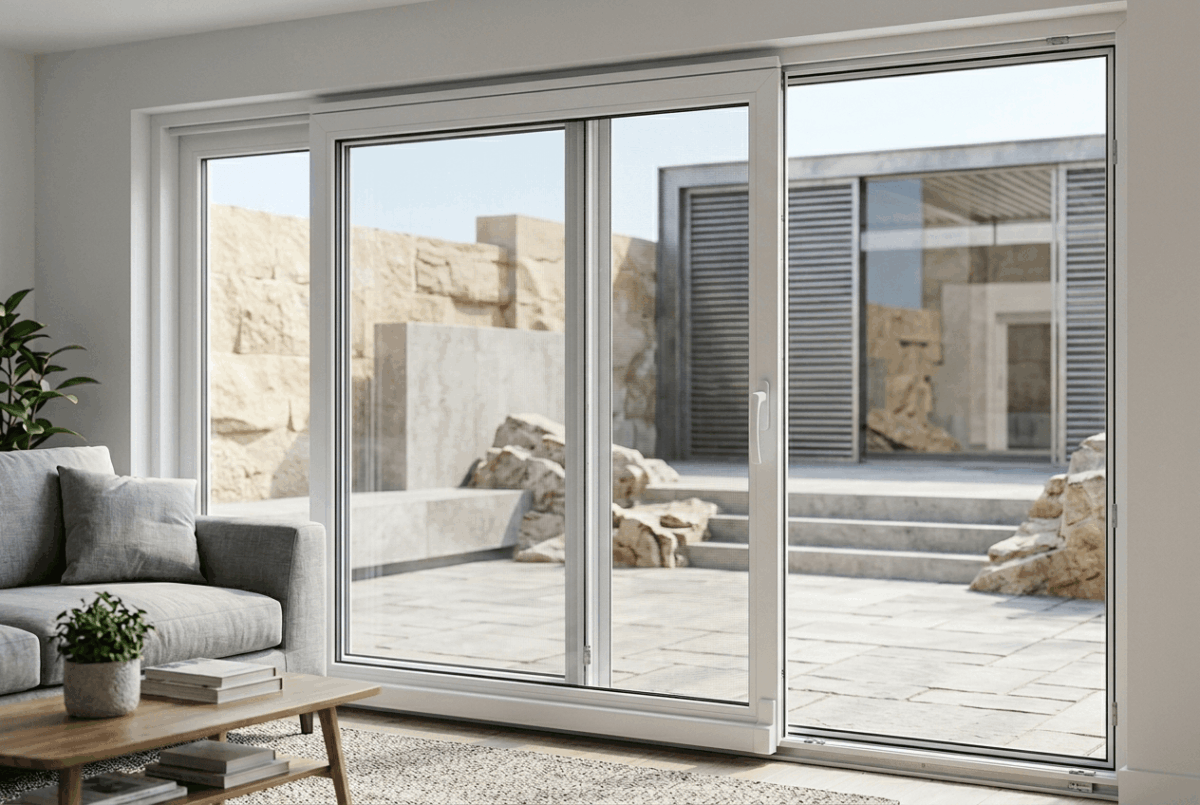
Sliding windows feature sashes that slide horizontally on parallel tracks. They can’t be swung inwards or outward, and only move sideways. They are used in places where space is a huge constraint.
Tilt and Turn Windows
These uPVC windows offer a dual-function mechanism that can be opened in two ways—slightly tilted or fully open. They offer better ventilation and enhanced security and are used extensively in high-rise apartments.
Fixed Windows
These widows do not open and remain fixed. They are used to improve ventilation and enhance the aesthetic appeal of spaces. These non-opening or picture windows are used in stairwells, hallways, living, and dining areas.
Villa Window
The uPVC villa windows feature a grill, double sash, and a bug screen. These windows are widely used in villas, luxury independent houses, and ground-floor residences.
French Window
French windows are floor-to-ceiling, double-sashed windows hinged on the side. They swing open, either inward or outward, from the centre and without a central mullion. They offer full natural light, ventilation, and unobstructed openings.
Awning Window
Hinged on the top, the awning window opens outward from the bottom with the help of a crank system. This creates a canopy effect, allowing ventilation even during light rain. They are used in bathrooms, kitchens, and basements.
Bay/Bow Window
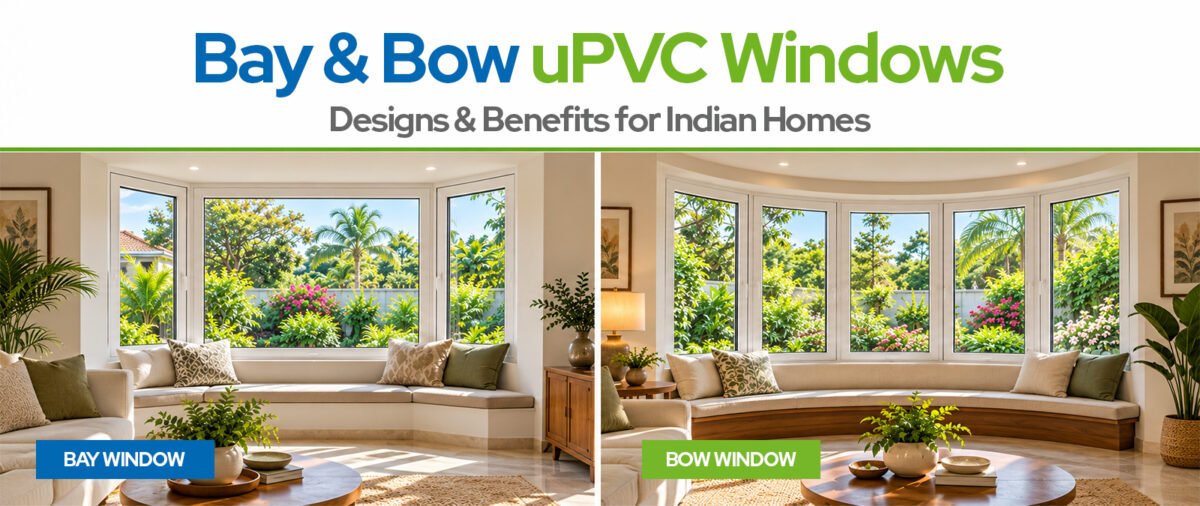
A bay window consists of three or more window panels that project outward from the main walls of a building. They are used in master bedrooms, living rooms, and dining areas.
Also Read: uPVC Doors Price in India
Customised Design Options
uPVC window frames can be customised in various designs. Here, let’s see various design options:
Different sizes and shapes: They can be customised into different shapes. Some of the options include arched, angled, and round shapes.
Glass options: Customisation in glass options includes reflective, frosted, and double-glazed glass for better insulation and security.
Colours: Though white is the standard colour, uPVC window frames are available in blue, black, grey, and wood finishes.
Installation Process
Here’s the step-by-step installation process of the uPVC windows:
Preparation: The window opening must be cleaned properly. Also, the new unit must be 1cm smaller than the opening for a proper fixing of the window.
Sill Installation: The sill is then cut to the appropriate size. Later on, silicone must be applied to the bottom and end caps, and screw it down.
Frame Placement: Put the frame in the opening properly.
Fixing: Here, nylon sleeve frame anchors or masonry screws are used to secure the frame to the wall.
Sealing & Insulation: To seal the gap, apply sealant between the frame and the wall.
Glazing & Finishing: Glass is finally installed and sealed with silicone sealant, both inside and outside.
Maintenance, Cleaning, and Care Tips
- Use water mixed with soap to clean profiles
- Do not use steel wool, scouring pads, or harsh chemicals
- Do not clean windows when the sun is shining directly on them, as this causes streaks.
- Use a soft cream cleaner for removing grime.
Cost of uPVC Window Frames
Cost depends factors like the size of the window, the type of design, the glass used, and installation. So, there is no fixed price; it varies.
Common Mistakes to Avoid
- Improper Installation and Sealing: If the frame looks uneven and is not properly sealed after fixing, it may lead to water leakage and drafts.
- Poor Quality Material: Using low-quality uPVC can lead to colour change (yellowing), cracking, or even warping.
- Neglecting Measurements: Improper measurements will lead to air gaps, affecting insulation.
- Ignoring Functionality: Neglecting functionality and focusing only on price or aesthetics (e.g., soundproofing, security, or climate suitability) can result in unsuitable windows.
Also Read: uPVC Louvers: A Practical Solution for Airflow, Privacy, Elevation Design
Why Choose Okotech for uPVC Window Frames
Okotech has become a preferred option in modern construction because it offers several USPs. Here are a few points why you need to choose Okotech.
- Lead-Free material: All profiles are 100% lead-free and non-toxic. So they are safe for families, workers, and the environment.
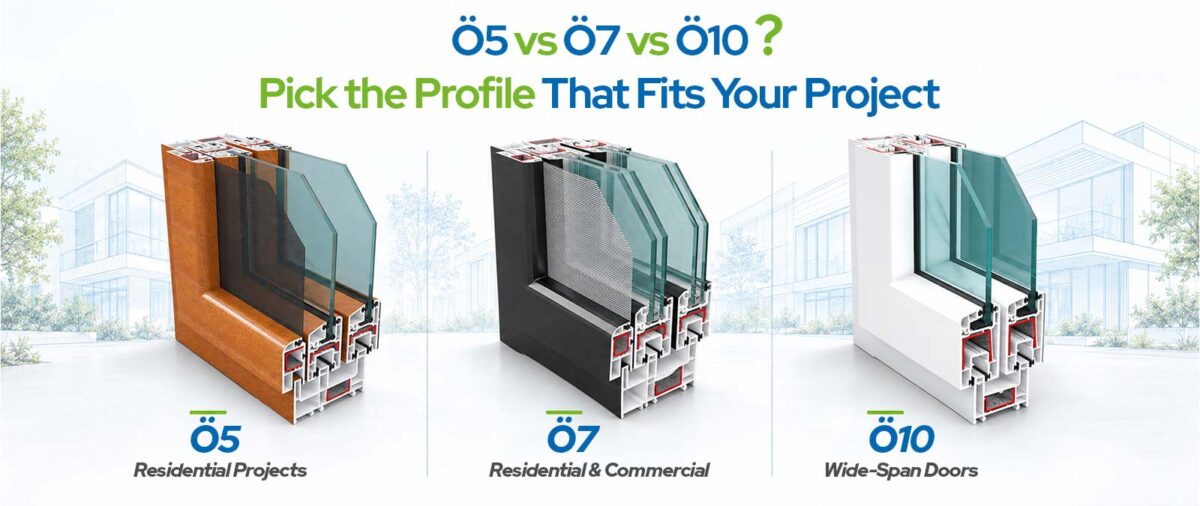
- Multi-Chambered Design: The window profiles of Okotech feature multiple internal chambers, reinforced with galvanised steel, and superior thermal and sound insulation.
- Wall Thickness: Okotech offers heavy-duty profiles with wall thicknesses ranging from 2.2 mm to 2.8 mm, for better stability.
- German Technology: Okoducts used advanced machinery, imported from Germany, to offer quality products.
Takeaway
When compared to wood, uPVC window frames are a practical upgrade because they offer a clean look. They can be customised into multiple designs and color options to match the interiors.
If you are planning new windows or replacing old ones, then choose Okotech to make a big difference.
Frequently Asked Questions:
What are uPVC window frames?
These are window frames made from a durable material called unplasticised polyvinyl chloride (uPVC). It is a low-maintenance building material used for strength and long-term performance.
Are uPVC window frames better than wood?
Yes, uPVC frames are better than wood because of their low-maintenance and moisture resistance. Unlike wood, uPVC frames do not rot, rust, or fade.
Do uPVC window frames last long?
Yes, uPVC window frames can last between 20 and 35 years. When maintained properly, the lifespan can be extended even further.
Are uPVC windows soundproof?
Yes, uPVC windows offer soundproofing. They can reduce outside noise to a great extent (up to 30–45 decibels), because the windows are made of multi-chambered frames, tight sealing, and double or triple glazing.
Do uPVC frames require maintenance?
Yes, but very little upkeep is required. Occasional cleaning with water and a damp cloth is enough to remove dirt. Also, lubricating hinges and locks is suggested.