uPVC doors are door systems made from unplasticised polyvinyl chloride (uPVC) profiles. They come in different configurations, including sliding, casement, and slide-and-fold doors, to suit different opening sizes and layouts.
A uPVC door can affect the way a space is used, how the opening functions, and how the home looks. The choice usually depends on factors such as opening size, door movement, number of panels, profile system, glazing or mesh requirements, and finish.
Key Takeaways
The right uPVC door depends on the size and layout of the opening, the required opening movement, the number of panels and tracks, and the selected profile system.
Sliding, casement, and slide-and-fold doors offer different opening options, while mesh or glazing requirements and the choice of finish can further influence the final configuration.
Regular cleaning and basic checks of the tracks, hardware, seals, and drainage points can help keep uPVC doors working smoothly.
What are uPVC Doors?
uPVC doors are made using unplasticised polyvinyl chloride profiles and are available in different configurations to suit the size and layout of an opening. The way the door needs to open, the number of panels, and the overall design can also affect the choice of configuration.
When choosing a uPVC door, consider the opening size, door configuration, number of panels, profile system, glazing or mesh requirements, colour and finish.
Common Types of uPVC Doors
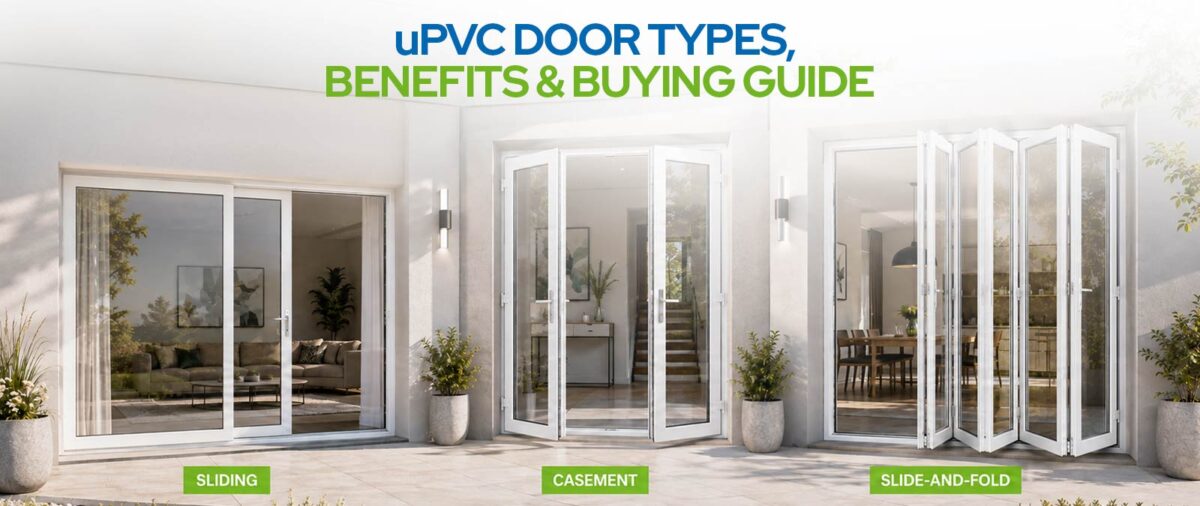
The three common types of uPVC doors are sliding, casement, and slide-and-fold doors. They differ mainly in the way they open and can be selected according to the size, space, and layout of the opening.
Sliding uPVC Doors
In sliding doors, the panels move from one side to another on tracks. These doors are available in 2-track and 3-track designs. A sliding door can also have fixed panels, top-fix sections or mesh panels. For larger openings, more than two sliding panels can be used.
Casement uPVC Doors
Casement doors are hinged doors, similar to the usual doors used in a home. They can be made with one opening panel or two opening panels. The door may open towards the inside or outside. Top-fix and arched top-fix sections are also possible in some designs.
Slide-and-Fold uPVC Doors
Slide-and-fold doors work by sliding the panels and then folding them to one side. They are available in arrangements such as 4/3/1 panels. These doors can open inward or outward. They are mainly considered for wider openings where more of the opening needs to be kept clear.
Sliding vs Casement vs Slide-and-Fold uPVC Doors
Sliding, casement and slide-and-fold uPVC doors differ mainly in their opening movement and how they use the available opening.
| Door Type |
Opening Mechanism |
Suitable When |
| Sliding uPVC Door |
Panels move horizontally along tracks |
Horizontal sliding movement is preferred |
| Casement uPVC Door |
Panels open on hinges |
An inward or outward hinged opening is required |
| Slide-and-Fold uPVC Door |
Panels slide and fold together |
A wider opening and a larger clear area are required |
Benefits of uPVC Doors
Security
uPVC doors can support the overall security of a home when the profile, configuration, and complete door system are selected according to the entrance requirements.
Design Flexibility
uPVC doors are available in different configurations, colours and finishes, making them suitable for a range of home designs and architectural styles.
Space Efficiency
The way a uPVC door opens affects how much space it needs during operation. Sliding and slide-and-fold configurations offer alternatives to conventional hinged doors where space is an important consideration.
Easy Maintenance
uPVC doors need simple routine care to keep them operating smoothly. Regular cleaning and checks of the tracks, hardware, seals and drainage areas can help maintain their operation.
What to Consider When Choosing a uPVC Door
1. Opening Size
The size and layout of the opening can influence which uPVC door configuration is suitable. The opening dimensions should therefore be checked before selecting the door.
2. Opening Type
The required opening movement can help determine which uPVC door system is suitable. Sliding, casement, and slide-and-fold doors each operate differently.
3. Number of Panels and Tracks
The number of panels and tracks should suit the size and layout of the opening. Larger openings may require configurations with more panels or tracks.
4. Mesh and Glazing Requirements
The selected uPVC door system should support the required mesh or glazing arrangement. This is important when the door needs additional mesh or a specific glazing configuration.
5. Profile System
The profile system forms an important part of a uPVC door. Frames, door sashes, interlocks, mullions, and glazing beads work together to form the complete door system.
6. Colour and Finish
The colour and finish of a uPVC door can be selected to match the overall design of the home. Available finishes can provide either a contemporary or wood-inspired appearance.
Understanding uPVC Door Profiles
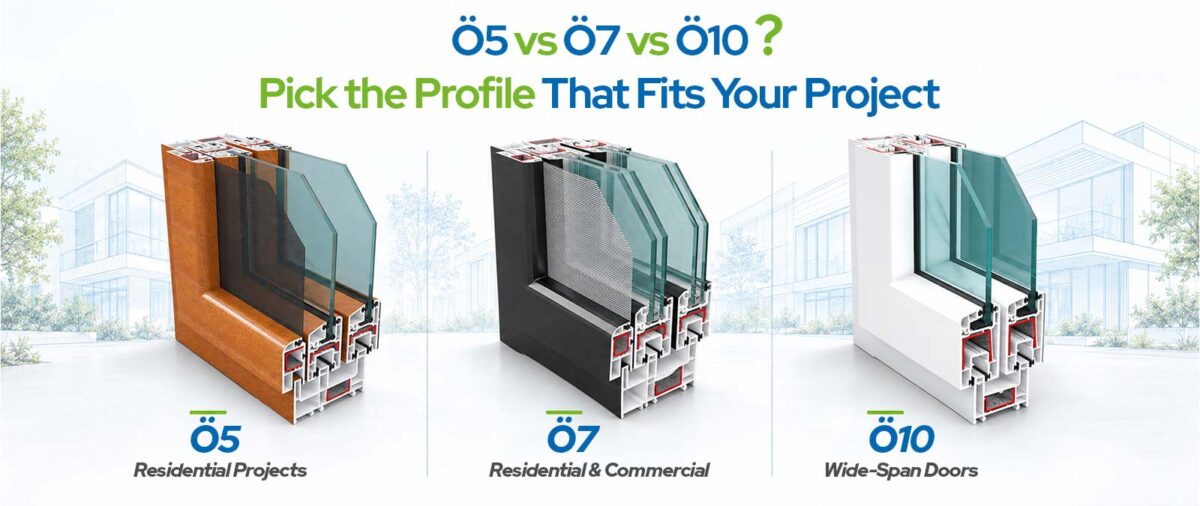
A uPVC door consists of several profile components that work together to form the complete door system. Depending on the system, these components can include outer frames, door sashes, sliding frames, interlocks, mullions, glazing beads, DG beads, mesh tracks and mesh-lock profiles.
Different profile series are designed for different door configurations and applications. Knowing the main profile components can make it easier to understand the door system and choose a suitable option.
Why Choose Okotech for uPVC Doors?
Okotech offers uPVC door systems in different configurations, profile options and finishes, along with stated product and hardware guarantees.
- Multiple configurations: Okotech offers sliding, casement and slide-and-fold systems in different track, panel and opening arrangements, with customised designs available for specific requirements.
- Dedicated profile systems: Okotech’s range includes door sashes, frames, interlocks, mullions, glazing beads and mesh-related components across different profile systems.
- Large-opening options: The 010 Profile Sliding Series includes 2-track, 3-track and 4-track systems, with configurations stated for openings up to 18 ft wide and 10 ft high with eight panes.
- Quality and testing: Okotech has an in-house laboratory and follows batch testing, quality checks and third-party testing, with stated conformity to EN 12608:2003 and IS 17953:2023.
- Multiple finishes: Okotech offers finishes including Golden Oak, Walnut, Rosewood, Grey, Dark Grey, Mahogany and Black.
- Long-term assurance: Okotech provides a 20-year guarantee against discolouration and structural degradation of its uPVC products. Mechanical parts and hardware, including locks, hinges and handles, are covered against malfunction under normal use for 1 year, subject to the applicable guarantee terms.
How to Maintain uPVC Doors
uPVC doors need simple, regular care to keep them working smoothly.
- Clean the door and tracks: The door surfaces and sliding tracks should be cleaned regularly to remove dust and dirt.
- Check hinges and hardware: Hinges and moving hardware should be lubricated with a silicone-based lubricant, and the door should be checked for stiffness or sagging.
- Check locks and handles: Locks and handles should be checked regularly to make sure they operate smoothly. They should not be forced when the door is not fully closed.
- Inspect seals: Door seals and thresholds should be checked for gaps, damage or wear.
- Keep drainage clear: Drainage points should be kept free from dirt and debris to help prevent water from collecting.
- Check before and after the monsoon: The door should be checked to make sure it closes and locks properly, with attention to any water ingress or changes in operation.
Conclusion
Choosing a uPVC door starts with understanding the opening and selecting a configuration that suits how the space will be used. The door type, panel arrangement, profile system, mesh or glazing requirements and finish should all be considered before making a decision.
Okotech offers different uPVC door configurations, dedicated profile systems, large-opening options and a range of finishes, along with stated product and hardware guarantees.
Explore Okotech’s uPVC door solutions to find a configuration suited to your project.
FAQs About uPVC Doors
What is the difference between a sliding and casement uPVC door?
A sliding uPVC door moves horizontally along tracks, while a casement uPVC door opens through a hinged movement. The suitable option depends on the opening size, available space and required door movement.
Which uPVC door is suitable for a wider opening?
Sliding systems with multiple tracks and panels and slide-and-fold systems can be considered for wider openings. The suitable configuration depends on the dimensions and layout of the opening.
What is a 4/3/1 slide-and-fold door?
A 4/3/1 slide-and-fold door uses multiple panels that slide and fold together as part of the opening arrangement. This configuration can be designed for both inward and outward opening.
Can uPVC sliding doors have mesh?
Selected uPVC sliding door systems can include mesh panels with dedicated mesh tracks and mesh-lock components.
Can a uPVC door have a top-fix section?
Certain uPVC door configurations can include a top-fix section, including an arched top-fix arrangement.
What profile components are used in uPVC doors?
uPVC door systems can include door sashes, outer frames, sliding frames, interlocks, mullions, glazing beads, DG beads, mesh tracks and mesh-lock profiles, depending on the system.
What is the largest uPVC door opening available from Okotech?
Okotech’s 010 Profile Sliding Series includes configurations stated for openings up to 18 ft wide and 10 ft high with eight panes.
Can Okotech uPVC doors be customised?
Okotech offers customised door designs according to specific customer requirements in addition to its standard door typologies.