uPVC Casement Doors
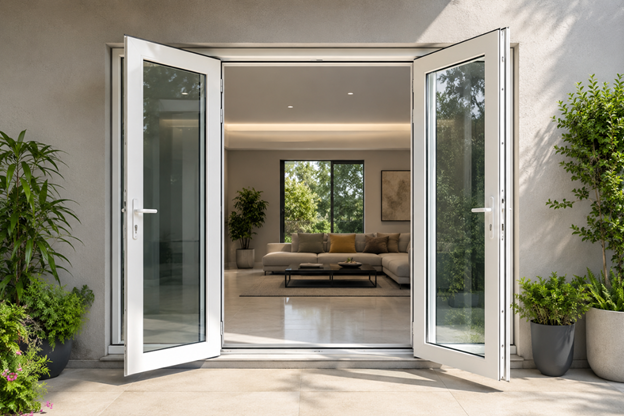
uPVC casement doors are side-hinged doors that open either inward or outward. They are made of unplasticised polyvinyl chloride (uPVC), which is durable and offers energy efficiency, making them a perfect choice for balconies, patios, and entrances.
If you walk into any of the modern apartments in Hyderabad and Bengaluru, you’ll see uPVC casement doors at the balcony or the kitchen exit.
Casement doors work much like a window, and they do not bend, swell, or corrode like wood or metal.
In this write-up, we will see its benefits, its frames, types, and applications.
Why Choose Casement Doors
Casement doors open wide like standard doors on hinges. They bring in lots of fresh air, are very easy to use, and have a timeless look. They are perfect for balconies, kitchens, bedrooms, and front entrances.
uPVC Material Advantages
uPVC doesn’t absorb moisture, so they do not swell, rust, or corrode in coastal settings. It is dimensionally stable during temperature changes, which is important in regions where there is extreme heat. Additionally, it really only needs the odd wipe-down and requires very little upkeep.
Wood requires constant care in India’s environment. It cracks in the summer, swells during the monsoon, and requires painting every few years to maintain its appearance.
uPVC is cheaper than aluminium and lasts over 20-25 years, if purchased from a reputable manufacturer. It’s also 100% recyclable.
|
|
|
|
|
|
|
|
|
|
|
|
|
| Material |
Durability |
Maintenance |
Weather Performance |
| Wood |
Moderate |
High |
Poor in humidity |
| uPVC |
Very High |
Very Low |
Excellent across conditions |
|
|
|
|
|
|
|
|
|
|
|
|
|
Casement Door Design Options
1. Single Panel Casement Doors
This design option features a single-panel sash, hinged on the frame. It swings open from either the left or right side, offering a clean look. This layout works best for standard interior doorways.
2. Double Panel Casement Doors
The double-panel doors feature two sashes that open outward from the center, eliminating a central pillar when open. This creates a wider entry point to enhance ventilation.
3. Glass-Insert Casement Doors
Incorporating glass panes straight into the entrance frame allows natural light to enter your house more deeply. By choosing frosted, clear, colored, or patterned glass, you can alter the transparency and appearance.
Colour & Finish Varieties
1. Standard White
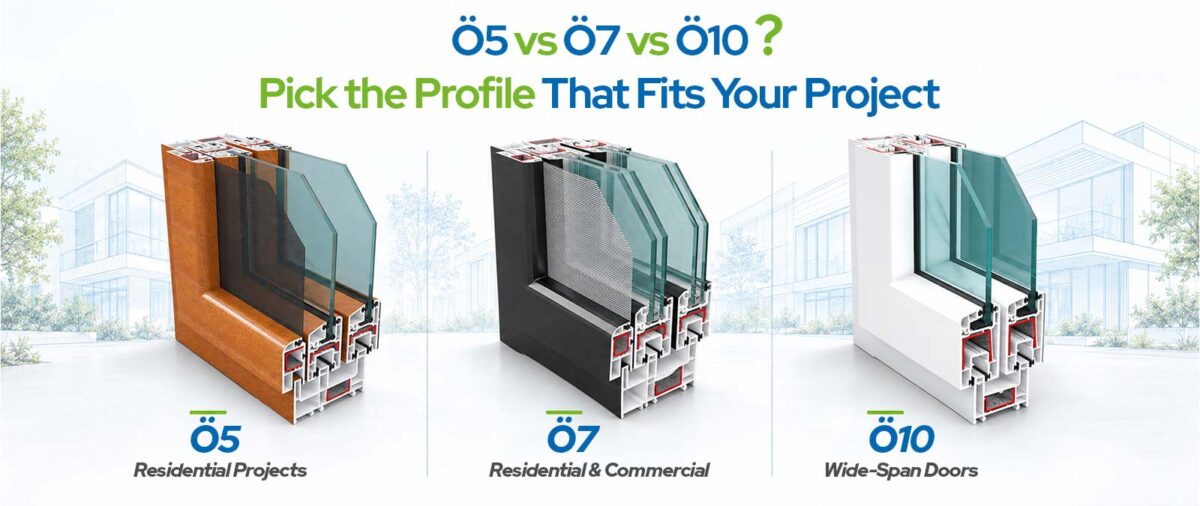
Vibrant white profiles provide a simple, minimalistic look. This adaptable choice complements contemporary architecture and produces a striking contrast with darker walls.
2. Wood-Grain Laminates
Wood-grain coatings mimic the warmth and rich feel of real wood. With this choice, you may have the classic appearance of wood without worrying about it warping, cracking, or needing frequent repainting.
3. Contemporary Tones
Dark, subdued colour schemes are often advantageous for contemporary house designs. Choices including matte black, charcoal grey, and deep anthracite blend in perfectly with minimalist or industrial interior designs.
Where Casement Doors Work Best
Casement doors work best in various spaces. This section underscores their applications:
1. Apartments and Independent Homes
Urban flats are a perfect option for uPVC casement doors due to their low maintenance requirements alone. There is no seasonal swelling to contend with, nor is there an annual painting schedule. T.
2. Balconies and External Entrances
Balcony doors are directly exposed to the elements, including UV, humidity, and rain. All of this is handled by uPVC without degrading. The seal will continue to function, the hardware won’t corrode, and the frames won’t fade.
3. Kitchens
Kitchens are hot, occasionally moist, and prone to steam and grease. Wood responds to all of this, but uPVC does not. In a functioning kitchen, a casement door’s ventilation is truly helpful; it wipes clean, and cooking odours don’t discolour it.
4. Offices and Commercial Spaces
Durability and low maintenance matter just as much in commercial settings. Clinics, schools, retail spaces, and offices have all found uPVC casement doors to be a practical long-term choice.
Benefit of Casement Doors
1. Weather Performance
This is where the reputation of uPVC is earned. Unlike organic materials, the substance itself does not respond to heat or moisture. Compressed rubber gaskets, usually made of EPDM, are used in uPVC casement doors and span the entire length of the frame. These gaskets create a continuous barrier against dust, wind, and rainwater when the door closes. This type of seal is necessary for homes in coastal Maharashtra, the northeastern states, or anywhere there is significant monsoon rains.
2. Noise Reduction
A tight seal and a dense frame do more than just keep out the rain. Additionally, they greatly reduce sound transmission. This results in substantially quieter interiors in cities with frequent traffic noise, construction, and neighbourhood activity. When the door is paired with double-glazed glass, the difference becomes truly noticeable.
3. Thermal Insulation
One of the reasons for high electricity bills is heat transmission via inadequately insulated door frames. Because of its limited thermal conductivity, the uPVC frame does not transport heat.
Over the course of a door’s 20 to 30-year lifespan, well-insulateduPVC dooranduPVC windowsystems have been linked to energy savings of up to 30% on cooling and heating expenses.
4. Maintenance
They don’t require rust treatment, sealing, or repainting. Use a cloth and a mild detergent to keep the frame clean. The only thing that has to be done is to periodically check the hinges and locking hardware and tighten a few screws. This is a true increase in quality of life for homeowners who have had to deal with wooden doors that require maintenance every year or two.
5. Security
High-quality uPVC casement doors come with multi-point locking as standard. The lock engages in several locations along the frame at once, as opposed to a single bolt engaging at one location. This spreads the weight and makes it much more difficult to push the door open.
This is further enhanced by the frame itself. Unlike wood, which can splinter or bend under pressure, uPVC is impact-resistant. German precision machinery is used in the production of Okotech’s casement doors, which are designed to withstand the kind of stress that compromises less expensive doors.
6. Appearance
Not every home could use the industrial plainness of the previous generation of PVC items. The uPVC casement doors of today are a different story. They may look good in both modern and traditional settings with their slim profiles, well-thought-out hardware, and variety of finishes. For example, a uPVC frame with a wood-grain finish appears warm and thoughtful from across the room, all without the upkeep requirements of wood.
How is a Premium uPVC Door Engineered on the Inside?
To guarantee longevity, insulation, and structural integrity, the engineering of a uPVC casement door depends on three concealed internal components.
1. Hollow Chambers
- Load distribution:The weight is distributed uniformly across the frame by several internal channels.
- Thermal insulation:Heat transfer is significantly reduced by trapped air pockets.
- Sound dampening:The air barriers disperse and reduce the transmission of sound.
2. Steel Reinforcements
- Bowing prevention:Galvanised steel avoids bowing by maintaining the frame’s precise straightness.
- Weight support:Heavy, multi-layered glass panels are supported by the metal core.
- Dimensional stability:The door will hold its shape for many years thanks to internal bracing.
z3. Gasket Systems
- EPDM rubber:High-quality gaskets spring back flawlessly and compress securely.
- Weather sealing:Superior rubber continuously resists dust, rainfall, and drafts.
- Long-term elasticity:Better materials keep the seal from deteriorating after years of use.
Why uPVC Casement Doors Are the Smarter Choice
Learn how the increased functionality, durability, and sustainability of uPVC casement doors can completely change your living area.
- Fully Recyclable:uPVC is completely recyclable. Reprocessing is done on old material. This keeps garbage out of landfills.
- Superior Ventilation:Unlike sliding doors that open only half, casement doors open completely. In doing so, total airflow is maximised.
- Built to Last:They offer great longevity because these doors last 20–30 years. They resist weather rot. They do not rust like wood or iron.
- Seamless Connection:Full openings merge indoor areas with gardens. This expands smaller rooms visually.
Why Installation of Casement Doors is Crucial
A well-made door that is improperly installed will perform poorly. Most homeowners are concentrating on the door itself; they don’t know how important installation quality is.
Before the frame is inserted, the wall opening must be square and level. The door and locking will feel stiff if a frame is installed into an aperture that is even slightly out of shape. This misalignment will be carried into every action.
A door that functions consistently for 25 years can be distinguished from one that begins to cause issues after three years by properly fixing the frame into the surrounding brickwork, sealing the space between the frame and wall, and adjusting the hardware.
Here is the step-by-step installation process for uPVC casement doors:
1. Measurement and Site Preparation
- Dust, old masonry, and other debris should be removed from the entrance.
- To make sure the brick-to-brick aperture is square, measure it several times.
- Make sure the frame perimeter has a consistent clearance gap of 5 to 10 mm.
2. Frame Positioning and Fixing
- Insert the door frame into the masonry opening that has been prepared.
- Check the horizontal alignment (level) and vertical alignment (plumb).
- Create anchor holes in the wall by drilling through the frame.
- Use heavy-duty masonry fastener screws to secure the frame.
3. Perimeter Grouting and Sealing
- Clear the space between the brickwork and the window frame.
- For insulation, inject expanding polyurethane (PU) foam into the opening.
- Put a silicone sealant that is resistant to weather on the outside and inside.
4. Shutter Hanging and Hardware Fitment
- Attach the door panels to the fastened frame hinges.
- Install the cylinders, handles, and multi-point locking systems.
- To precisely line the shutters, adjust the hinge 3D screws.
5. Final Testing and Commissioning
- Verify that the door operates smoothly and without friction.
- Make sure that when the compression gaskets are closed, they form an airtight seal.
- Before handover, make sure all locking points are securely engaged.
Takeaway:
uPVC casement doors are highly durable and perfect for Indian weather. They do not swell like wood or rust like iron, so they stay secure and look clean for 20 to 30 years. Unlike sliding doors, they do not get heavy or hard to use over time. If you are looking to upgrade your doors, Okotech offers excellent quality and long-term customer service.
Okotech sliding doors are:
- 100% lead-free composition
- Uses German extrusion technology for pro-life extrusion
- Features a multi-chambered design
- Heavy-duty wall thickness (thicknesses ranging from 2.2 mm to 2.8 mm)
Frequently Asked Questions (FAQs)
What is a uPVC casement door?
A side-hinged door made from Unplasticised Polyvinyl Chloride. It opens inward or outward on vertical hinges and is known for its durability, weather resistance, thermal insulation, and less upkeep.
How long will it last?
They last between 20 and 30 years when installed properly and with basic care. The material resists weathering, rot, and corrosion in ways that wood and metal simply don’t.
Does uPVC expand and contract with heat?
There’s minor dimensional movement with temperature, but modern profiles are designed to accommodate it within the system. It doesn’t affect sealing or operation under normal conditions.
What does maintenance actually involve?
Cleaning with a soft cloth and mild soap. Periodic hardware checks. That’s genuinely all. No painting, no rust treatment, no seasonal sealing.
Are these doors suitable for all Indian climates?
Yes, they are suitable for Indian climates because the frame is made of durable material and a quality sealing system handles coastal humidity, monsoon rainfall, dry heat, and cooler northern winters without compromise.
Can they be customised?
Yes, in size, finish, glass type, and hardware. Standard profiles cover most applications, and custom configurations are available for specific design requirements.