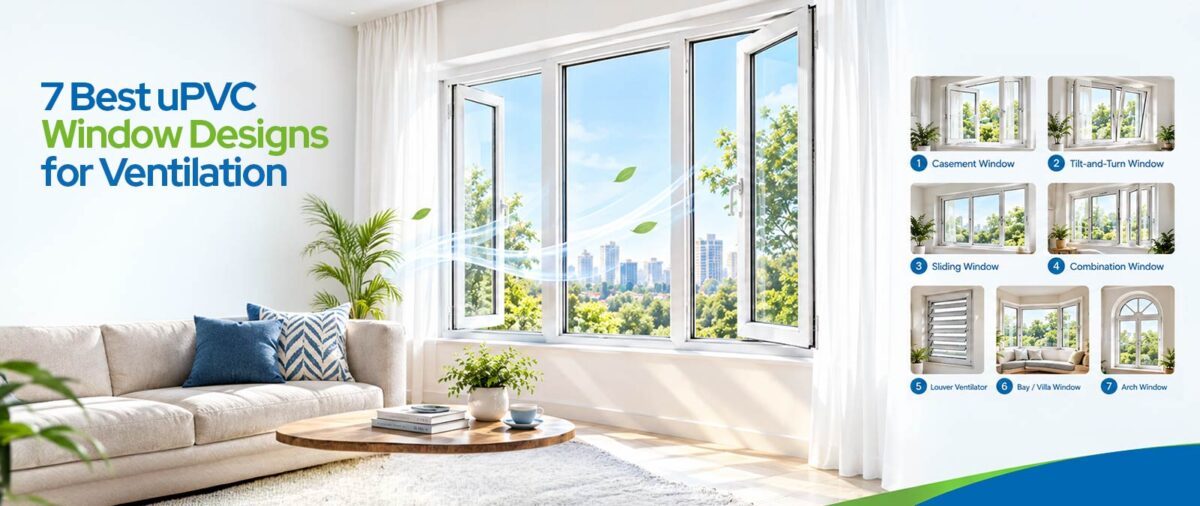
A window may look good, but does it let enough air into the room? This is one thing to check before choosing windows for your home.
Casement windows open wide. Tilt-and-turn windows can open slightly at the top or swing open fully. Sliding windows are useful where there is less space around the window. Even arch windows can let in air if part of the design opens.
Your choice will depend on the room layout, the space available and how air flows through the house.
Why Ventilation Matters When Choosing Windows
While buying windows, most of us look at the design, colour and glass. We should also check how much of the window actually opens.
For example, a large window with mostly fixed glass can brighten a room without letting in much air. This can be a problem in rooms that feel stuffy or remain damp after cooking, bathing or drying clothes.
Some uPVC windows swing open, while others slide. A few offer both a small opening and a full opening. Knowing the difference helps you decide what will work in each room.
uPVC Window Designs for Better Ventilation
Casement windows are hinged on one side and usually open outwards. Since the shutter opens wide, there is more space for air to enter compared to many sliding windows of the same size. The open shutter can also help catch a breeze, depending on which way the wind is blowing.
You can use them in bedrooms, kitchens or other rooms where you need a wide opening. Check the space outside first. The shutter should not come in the way of people using the balcony or walkway, or hit another window.
These windows can shut tightly when they are well made and properly fitted. The profile, gaskets and hardware also play a part in how well they seal.
Suitable for: Bedrooms, kitchens and rooms with space outside for the shutter to open.
With a tilt-and-turn window, you can tilt the top inwards to let in a little air. When you need a wider opening, you can swing the shutter inwards from the side. This also makes it easier to reach and clean the outer glass.
You will need some clear space inside the room. Furniture and curtains should not get in the way when you open it. If there are children at home, ask the supplier about safety locks and restrictors to limit the opening.
Suitable for: Rooms where you want to choose between a small gap and a wide opening.
3. Sliding Windows
Sliding windows move sideways on tracks, so there is no shutter swinging into or out of the room. They are useful when furniture is close to the window or when the window opens towards a narrow balcony.
In a standard two-panel design, you can open roughly half the window’s width. Other arrangements may open more, depending on the tracks and how the panels slide.
You can also ask the supplier whether a trickle vent can be fitted. It is a small vent that lets some air pass through even when the window is closed.
Suitable for: Small rooms, balconies, and places with less space around the window.
4. Combination Windows
Combination windows have fixed glass along with sections that open. For example, you may have a large fixed glass panel in the middle and an openable window on each side.
The fixed part gives you daylight and a view. The side windows let in air. Before choosing this design, check the size of the parts that open. A large window with only a small opening may not let in enough air for the room.
Suitable for: Living rooms, dining rooms, and wide window openings.
5. Louver Ventilators
Louver ventilators have slanting slats with gaps that allow air to pass through. They are commonly used in bathrooms and utility rooms where privacy and ventilation are both needed.
Some designs have fixed slats, while others have adjustable slats. Before buying, check whether insect mesh is included and how well the design keeps rain out.
The amount of air passing through depends on the conditions around the window. If your bathroom stays damp after use, you may also need an exhaust fan to remove moist air.
Suitable for: Bathrooms, washing areas and utility rooms.
6. Bay and Villa Windows
Bay windows extend outwards from the wall and have several sections. Some sections may be fixed, while others can open.
For ventilation, check how many shutters open and how much clear opening they provide. Openable sections facing different directions may help catch a breeze. However, the wind direction and nearby buildings will affect the airflow.
If you are choosing villa windows, ask the supplier to show you how they open. Different suppliers may use this name for different designs, so check the exact window arrangement before ordering.
Suitable for: Large living rooms and independent houses with enough space for these designs.
7. Arch Windows
Arch windows have a curved top. They can be fully fixed, have openable shutters or combine the two. The curved shape does not improve ventilation on its own. What matters is which sections open and how much space they leave for air.
For example, you could choose a fixed arched top with casement shutters below. This gives you daylight along with an opening for fresh air. Ask the supplier which arrangements are available and make sure the shutters have enough room to open safely.
Suitable for: Living rooms, staircases and other spaces where you want an arched window with sections that open.
Comparison at a Glance
| Window design |
How it provides ventilation |
What to check |
| Casement |
Opens wide to let in fresh air |
Space outside and exposure to wind |
| Tilt-and-turn |
Tilts for a small opening or swings inwards for a wider one |
Space inside and safety hardware |
| Sliding |
Lets in air without a swinging shutter |
Opening size with the chosen track layout |
| Combination |
Uses openable sections alongside fixed glass |
Size and position of the sections that open |
| Louver ventilator |
Lets air pass between angled slats |
Privacy, rain protection and whether an exhaust fan is needed |
| Bay / villa |
Can have several sections that open |
The actual design and available opening area |
| Arch |
Can pair a fixed curved top with openable sections |
How it opens, opening size and space for the shutters |
What Should You Check Before Choosing?
How Much of the Window Opens?
Check the clear space available for air when the window is open. Two windows with the same overall measurements can have very different opening sizes.
Mosquito mesh, safety restrictors and other fittings can also affect the opening or airflow. Ask the supplier how these will work with your chosen design.
Can Air Move Through the Room?
Air needs a route through the room. Openings on opposite or adjacent sides can help, depending on the layout and outdoor conditions.
Look at the position of doors, other windows and internal partitions. A window that provides good airflow in one room may not work as well in another.
What Is the Room Used For?
In bedrooms and living rooms, you may want to adjust ventilation at different times of the day. Kitchens and bathrooms also need to remove moisture and odours close to where they are produced.
Plan the windows and exhaust arrangements together for these rooms.
Does the Window Need a Vent?
A trickle vent provides a small amount of background ventilation. Before adding one, ask how much air it lets through, whether it fits the window and what maintenance it needs.
Terms such as slot, over-frame and through-frame describe different vent types. The name alone will not tell you whether a vent suits your room. Check the specifications of the product being offered.
What Are the Conditions Outside?
Consider rain, dust, traffic noise and wind direction. A room facing a busy road may need a different ventilation arrangement from one overlooking a garden.
A small window opening or an ordinary trickle vent does not filter outdoor pollution on its own. If you need filtered air, speak to a specialist about a suitable ventilation system.
For coastal homes, check that the hinges, handles, screws and other hardware suit the conditions, along with the uPVC profile.
Choosing the Right Design for Your Home
Different rooms may need different windows. Casement windows give you a wide opening. Sliding windows save space around the window. Tilt-and-turn windows let you choose how far to open them. Arch windows can offer both a curved design and ventilation if they have openable sections.
Whatever the style, check how much of the window opens. Before ordering, ask the supplier to demonstrate the opening arrangement and explain how it will work in your room.
For an Okotech-based window system, confirm the available designs, hardware and vent options with the window supplier.
Aparna Venster offers sliding, casement, arch, combination, tilt-and-turn and villa uPVC windows. It also handles the survey, design, installation and maintenance, so you do not have to coordinate with separate vendors for these services.
Frequently Asked Questions
What Type of uPVC Window Is Best for Ventilation?
Casement windows are a good choice because they open wide. Tilt-and-turn windows offer a wide opening too, with a smaller tilt option when you need less air. The right choice depends on your room layout and the space around the window.
Which Windows Should I Open for Better Airflow?
Where possible, open windows on opposite or adjacent sides of the room to give air a path through it. Wind direction and nearby buildings will also affect how much air moves through.
Can Tilt-and-Turn Windows Be Used for Daily Ventilation?
Yes. Use the tilt position for a small opening and the turn position for a wider one. Follow the supplier’s instructions for safe use, especially if children can reach the window.
Are Louver Ventilators Useful in Bathrooms?
Yes, they let air pass through while providing some privacy. If the bathroom remains damp, you may also need an exhaust fan to help remove moisture.
Do Trickle Vents Affect Energy Efficiency?
Trickle vents let outdoor air in, which can change how much heating or cooling a room needs. The effect depends on the vent, the weather and how you use it. Choose one that meets the room’s ventilation needs.
Are Arch Windows Suitable for Ventilation?
Yes, if they have sections that open. A fully fixed arch window does not let in fresh air, so check the opening arrangement before you choose one